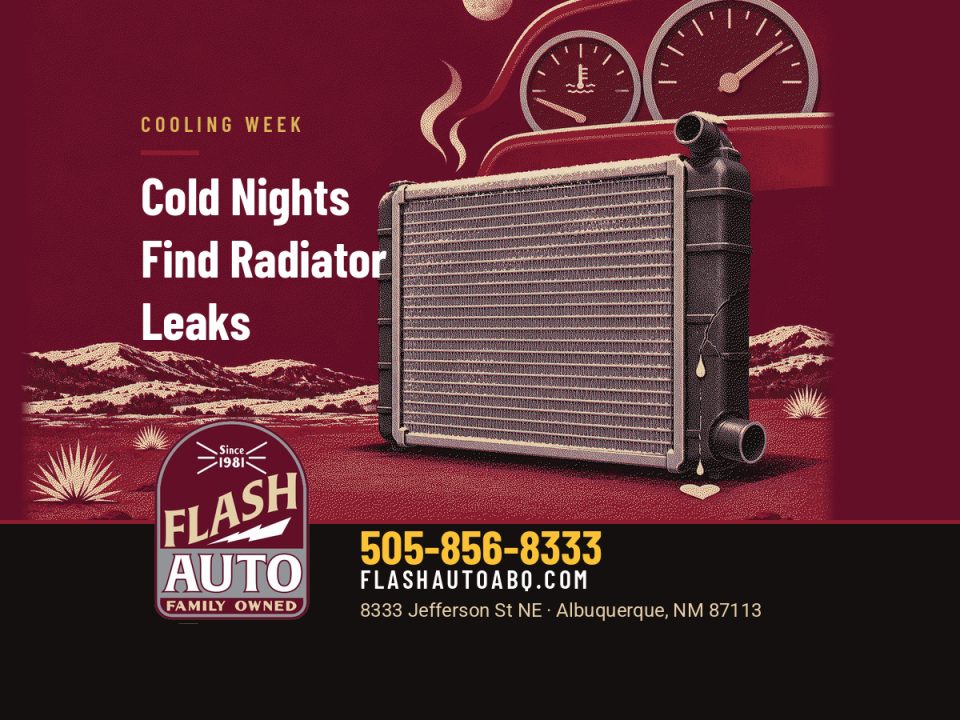



Radiator Leaks Show Up When It Turns Cold: Cracked Tanks, Weeping Seams, and That Sweet Smell
November 6, 2026
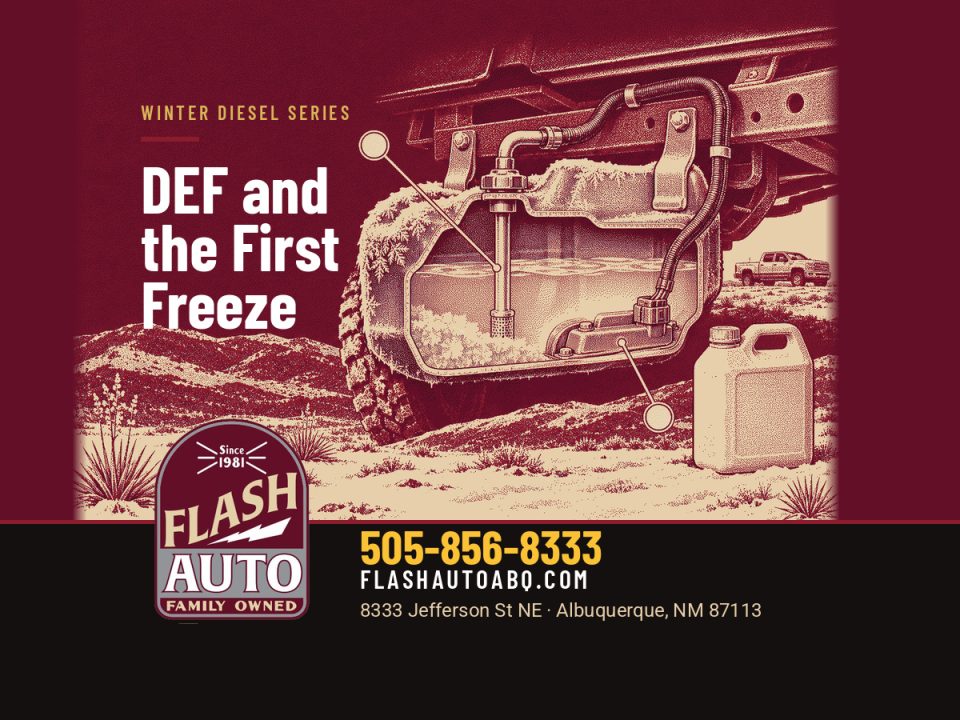
Winter Diesel Series: DEF in Cold Weather, What HD Pickup Owners Need to Know
November 7, 2026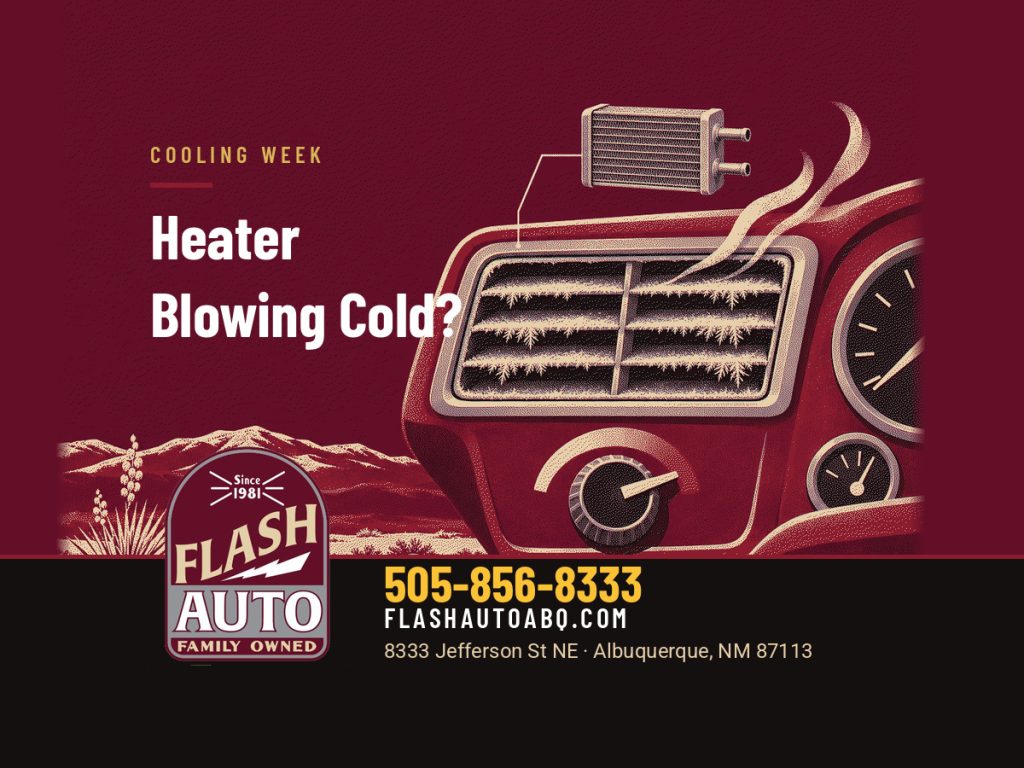
You climb in on a frosty Albuquerque morning, crank the heat, and get a blast of cold air that never warms up. A heater that is not working is uncomfortable, but it is also a clue about your cooling system and a problem for your defroster. Here is how to read what your heater is telling you, clue by clue.
- Your heater borrows heat from the engine’s coolant, so most heater problems start in the cooling system
- When and how the heat fails, at idle, all the time, or on one side only, points to different causes
- No heat plus a high temperature gauge is a stop-now warning, not a comfort issue
How Does a Car Heater Work?
Your heater does not make heat on its own. It borrows it from the engine.
Hot coolant flows from the engine through the heater core, a small radiator tucked behind the dashboard. A blower fan pushes air across the core and into the cab. A blend door mixes heated and outside air to match the temperature you set.
That means a heater needs four things: enough hot coolant, coolant that actually flows, a working blend door, and a working blower. When the heat goes cold, one of those four has stopped doing its job.
Our October post, “Antifreeze Does More Than Stop Freezing: The Coolant Test to Do Before November,” covered the basic heater symptom; this one goes deeper on diagnosis.
Why Is My Car Heater Not Working? Read the Clues
Warm while driving, cold at idle
This pattern usually points to low coolant or an air pocket in the system. At idle, the water pump turns slower and moves less coolant. If the level is low, the heater core is often the first place to go without.
Trapped air also tends to collect in the heater core, often after a top-off or repair when the system was not bled properly.
Cold all the time, and the temperature gauge stays low
If the heat never gets hot and your temperature gauge sits lower than usual, a thermostat stuck open is a likely suspect. The thermostat is supposed to stay closed until the engine warms up. When it sticks open, coolant flows to the radiator too early and the engine never reaches full temperature.
On a cold morning, that means lukewarm air for the whole drive.
One side hot, one side cold
On vehicles with dual-zone climate control, each side has its own blend door, usually moved by a small electric actuator. If one side blows hot and the other stays cold, a failed actuator or a stuck blend door is a common cause. A clicking or tapping sound behind the dash when you change the temperature is another hint.
Sweet smell, greasy fog, or damp carpet
These three together point to a leaking heater core:
- A sweet, syrupy smell inside the cab
- A greasy film or fog on the inside of the windshield that is hard to wipe off
- Damp carpet on the passenger side floor
A leaking heater core is a visibility problem as well as a comfort problem. That film is hard to see through with headlights coming at you after dark, and coolant vapor is not something to keep breathing.
No air at all, or air only on high
If you hear no fan and feel no air, the issue is likely the blower motor or its electrical circuit. If the blower works only on the highest setting, a failed blower resistor or control module is a classic cause. The engine may be making plenty of heat; it just is not reaching you.
No heat and a high temperature gauge
This combination is serious. When coolant runs very low, the heater core loses its supply first, and the engine starts running hot. Pull over safely, turn the engine off, and follow the steps in “What to Do If Your Engine Overheats: A Step-by-Step Guide for New Mexico Drivers.” Never open a hot radiator cap.
Shivering through your commute? A heater and cooling system check at Flash Auto can find the cause.
Heater Clues at a Glance
| Clue | Likely Cause | What to Do | If You Wait |
|---|---|---|---|
| Warm while driving, cold at idle | Low coolant or air pocket | Check the level cold, then inspect for leaks | Overheating risk |
| Cold all the time, gauge stays low | Thermostat stuck open | Inspect and test the thermostat | Slow defrost all winter |
| One side hot, one side cold | Blend door or actuator | Climate control check | Uneven heat, poor defrost |
| Sweet smell, greasy windshield fog, damp carpet | Heater core leak | Pressure test soon | Blocked view, coolant loss |
| No air, or air only on high | Blower motor or resistor | Electrical check | No defrost airflow |
| No heat and a high gauge | Severe coolant loss | Pull over, engine off, let it cool | Engine damage |
Why Defrost Is a Safety System
The heater feels like a comfort feature, but the same system clears frost and fog from your windshield. NHTSA’s winter driving tips include making sure your defrosters and wipers work before winter.
In Albuquerque, big day-to-night temperature swings mean frost on the glass even when afternoons are mild. In the East Mountains and Sandia foothills, cold mornings arrive even earlier, and a weak defroster leaves you peering through a small clear patch.
What You Can Check Before Your Appointment
A few safe observations help pinpoint the cause:
- Check the coolant reservoir with the engine cold. A level below the mark is a strong clue.
- Watch whether the temperature gauge runs low, normal, or high.
- Try each blower speed and listen for the fan.
- Note when the heat fails: at idle, all the time, or on one side.
What a Heater Diagnosis Looks For
A good heater diagnosis follows the clues rather than guessing. Depending on the symptom, that can include a coolant check, a cooling system pressure test, checking whether the thermostat opens on time, and testing the blend doors and blower circuit.
Flash Auto will find the cause and talk with you about repair options. The fix might be small, or it might point to a cooling system issue worth catching before winter. For more on keeping coolant healthy, see our fall fluid reset.
A Note for HD Diesel Pickup Owners
A Power Stroke, Cummins, or Duramax pickup can take a while to warm the cab on a cold morning, and a gentle drive warms it faster than a long idle. A heater that stays cold even after a steady highway run is worth a closer look.
Frequently Asked Questions
Why does my car heater blow cold air at idle but warm air when driving?
This usually means low coolant or an air pocket in the cooling system. At idle, the water pump moves less coolant, and the heater core is often the first place to go without. Check the reservoir with the engine cold and have the system inspected for leaks.
Can a bad thermostat cause no heat?
Yes. A thermostat stuck open lets coolant flow to the radiator before the engine warms up, so the engine runs cool and the heater blows lukewarm air. A temperature gauge that stays lower than usual is a common sign.
Is it safe to drive with a leaking heater core?
It is not a good idea to put it off. A leaking heater core can fog the windshield, drain coolant until the engine overheats, and fill the cab with coolant vapor. Have it inspected soon, before you need the defroster most.
Get Your Heat Back Before the Coldest Mornings
A heater blowing cold is your cooling system asking for attention. Finding the cause now means a clear windshield and a warm cab on the first truly cold morning.
Flash Auto has been family owned since 1981 and is a AAA Approved Repair Facility. You get straight answers and your go-ahead before any work begins. Call 505-856-8333 or book your visit online. Flash Auto is on Jefferson St NE, near the North I-25 corridor.
Flash Auto
8333 Jefferson St NE
Albuquerque, NM 87113
505-856-8333