


Heater Blowing Cold? Thermostat, Coolant, and Heater Core Clues
November 7, 2026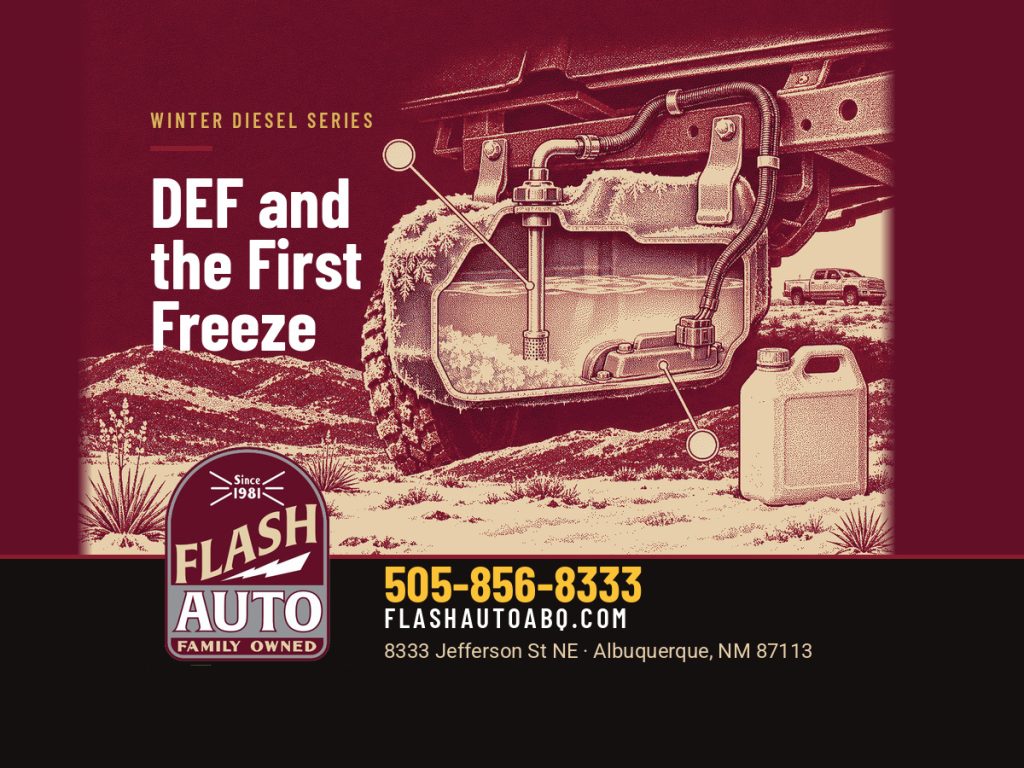
A frozen DEF tank looks alarming, but it is usually the smallest winter worry on a diesel pickup. The bigger problems are stale fluid, a dirty fill, and a heater or sensor fault that waits for the first cold snap. Here is how diesel exhaust fluid behaves in the cold on a Power Stroke, Cummins, or Duramax pickup, and how to keep its warnings off your dash.
- DEF freezes at about 12°F, and that is normal: the truck’s heated tank and lines thaw it once the system runs
- Heat and age break DEF down, so a jug that spent the summer in a hot garage may not be fit to pour this winter
- A DEF warning that lingers after warm-up starts a countdown toward reduced power, so it deserves a diagnosis, not a guess
A Quick Refresher: What Does DEF Do?
Diesel exhaust fluid is a precise mix of urea and purified water. Your truck sprays it into the exhaust ahead of a catalyst, where it helps turn nitrogen oxides into nitrogen and water vapor. It never touches the fuel.
Our Winter Diesel Truck Maintenance Guide for New Mexico covered DEF in one short section. This post goes deeper.
Does DEF Freeze? Yes, and Your Truck Is Built for It
Diesel exhaust fluid freezes at about 12°F. Albuquerque gets that cold only on its coldest nights, but trucks headed north to Taos, Angel Fire, or Red River can sit through that kind of cold often.
Heavy-duty pickups plan for it. The DEF tank and lines are heated, and frozen DEF thaws once the system runs, while the truck starts and drives normally.
What happens to DEF when it freezes?
Freezing does not ruin DEF. Once it thaws, it works as before. Like water, though, DEF expands as it freezes, which is why the tank is designed with room to spare. Fill to the normal full point and stop there, rather than topping off to the brim.
Never add anything to DEF
Anything mixed into DEF contaminates it and can damage the emissions system, and the heated system already handles the freeze. That rule covers tap water, washer fluid, and any additive sold as a winter fix.
Is Your DEF Stale? Heat and Age Break It Down
Here is the winter problem that starts in summer. Heat and time slowly break DEF down, and stored fluid loses quality faster in a hot space.
A jug bought in June and left in a garage through an Albuquerque summer may be past its best by December. Stale DEF can set a quality warning even when the tank is full.
- Check the date code printed on the jug or box before you pour
- Buy sealed containers from a busy store or truck stop where stock moves quickly
- Store spare DEF in a shaded, moderate spot, not rolling around the truck bed all season
Keep It Clean: Contamination Is the Quiet Problem
Dirt, dust, fuel, oil, and even tap water can trigger warnings and harm the emissions parts downstream.
- Use a dedicated funnel or spout that only ever touches DEF
- Wipe the cap and filler area before you open it, especially after a dusty or snowy drive
- Never reuse oil, coolant, or washer fluid containers for DEF
- Double-check the cap: the DEF filler usually has a blue cap, and DEF never goes in the fuel tank
If DEF ends up in the fuel tank, do not start the engine.
What are the white crystals around the DEF cap?
DEF leaves white crystals as it dries. A little crust around the filler neck after a spill is common, and it wipes off with a damp cloth. Keep the crystals from falling into the tank. Crust that keeps building around lines or fittings can point to a small leak.
Seeing a DEF message you don’t recognize? A diagnostic check at Flash Auto can tell you what it means before it limits your truck.
DEF Warning Messages and the Derate Countdown
Every modern HD diesel pickup watches its DEF closely. The warnings usually fall into three groups:
- Low level: the tank needs a refill
- Poor quality: the fluid is diluted, stale, or contaminated
- System fault: a heater, sensor, pump, or line problem
Ignore those warnings long enough and the truck protects its emissions system by limiting itself: a countdown of miles or restarts, then reduced speed or power, often called derate. Details vary by manufacturer and model year, and your owner’s manual explains how your truck handles it.
The key point: a DEF warning is a timer, not a suggestion. Act on it while the truck still drives normally, not on a cold shoulder of I-25.
DEF Heater and Quality Sensor Faults
A DEF heater fault can hide all summer, because the heater only matters in the cold. The first freezing week is often when it finally shows up, which makes early November a smart time for a diesel check at Flash Auto.
Quality sensors can also fail or read wrong. A quality warning right after a fill with fresh, sealed DEF may point to a sensor or system problem, not the fluid. A scan for stored codes, a check of the heater circuits, and a test of the fluid itself help separate the two.
DEF Symptoms and What to Do
| Symptom | Likely Cause | What to Do | If You Wait |
|---|---|---|---|
| DEF message on a frigid morning that clears after driving | Frozen fluid thawing as designed | Drive normally and confirm it clears | Usually nothing, if it clears |
| Warning stays on after full warm-up | Heater, sensor, or line fault | Diagnostic check soon | Countdown to reduced power |
| Quality warning right after a refill | Stale or contaminated DEF, or a sensor fault | Check the jug’s date code, then diagnose | Derate and a stressed emissions system |
| White crust building around lines or fittings | Small DEF leak | Inspection | Repeat low-level and quality warnings |
| DEF poured into the fuel tank | Fill mix-up at the pump | Do not start the engine; have it checked | Fuel system damage |
More From the Winter Diesel Series
DEF trouble often arrives with other cold-weather issues, like weak batteries and slow starts. The Flash Auto Winter Diesel Series covers those in “Glow Plugs, Grid Heaters, and Block Heaters: How Diesel Trucks Start on a Freezing Morning.” Our post on diesel vs gas maintenance schedules explains why diesel intervals differ, and NHTSA’s winter driving tips cover the rest of your winter prep.
Frequently Asked Questions
Is it okay if the DEF in my truck freezes?
Yes. Diesel exhaust fluid freezes at about 12°F, and heavy-duty pickups have heated DEF tanks and lines that thaw it once the system runs. Freezing does not damage the fluid. A DEF warning that stays on after the truck is fully warmed up is a different matter and needs a diagnostic check.
How long does DEF last in storage?
It depends on storage. Heat and age break DEF down, so fluid kept in a hot garage or truck bed loses quality faster than fluid kept somewhere cool and shaded. Check the date code and buy sealed jugs where stock moves quickly.
What happens if I ignore a DEF warning on my diesel truck?
Modern diesel pickups respond to an ongoing DEF problem with a countdown, then limit speed or power to protect the emissions system. The exact steps vary by manufacturer and model year, so check your owner’s manual. Acting early keeps you in control of the timing.
Keep DEF Off Your Winter Worry List
Diesel exhaust fluid is simple when the fluid is fresh, the fill is clean, and the heaters and sensors are healthy. A quick check now keeps a dash message from turning into a reduced-power drive home. Flash Auto specializes in heavy-duty diesel pickups, including Power Stroke, Cummins, and Duramax, and has been family owned since 1981. You get straight answers and your go-ahead before any work begins.
Call 505-856-8333 or schedule a winter diesel check. Flash Auto is on Jefferson St NE, near the North I-25 corridor.
Flash Auto
8333 Jefferson St NE
Albuquerque, NM 87113
505-856-8333